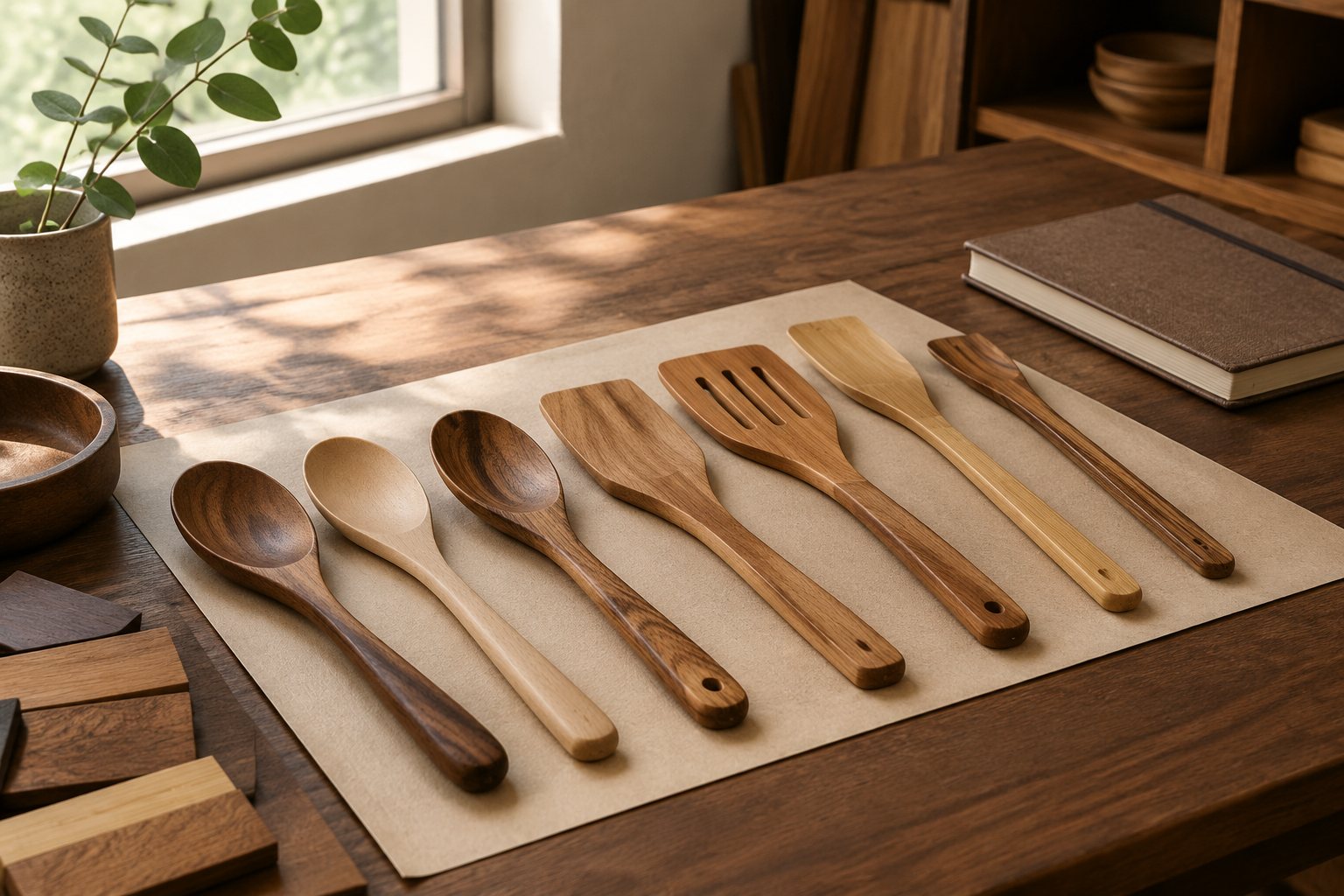
What SylvanSet is
SylvanSet is a sourcing desk for wooden kitchen utensil programs: custom shapes, private label, laser engraving and small-batch wholesale. It is operated by FULVERA and coordinates verified partner workshops in southeastern China's wood and bamboo kitchenware belt. The desk is deliberately not a factory. It buys nothing on speculation, holds no stock of spoons in a warehouse, and runs no machines. What it runs is a process: finding the right workshop for a program, fixing the terms in writing, and checking that what ships matches what was approved. The geography and the verification process are described on the sourcing network page.
What the desk does
- Verifies partner workshops before they join a program route: business license, sample capability, production evidence and written terms.
- Routes each program to the workshop whose species, shapes and branding strengths fit it, and provides a workshop profile per program.
- Writes the spec sheet: species, dimensions, finish system, engraving, packing and carton marks.
- Coordinates sampling through to golden sample approval, and keeps the approved standard on file.
- Checks production against the approved documents, reviews inspection evidence and spot-checks against the golden sample.
- Supplies the species, origin basis and finish information your declarations and compliance advisers need.
- Handles reorders on file programs and the after-delivery process if something arrives wrong.
What the desk does not do
It does not manufacture; production is carried out by the partner workshops. It does not claim certificates, test results or client references on anyone's behalf, and it does not publish client names. It does not quote a price without a program, because a per-piece number without species, shapes and packaging behind it would be fiction. And its office in Yongjia, Wenzhou is a coordination office, not a production site, so a visit there is a meeting about your program, not a factory tour; where a workshop visit is useful, the desk coordinates it with the workshop directly.
Who the desk serves
The buyers we work with are kitchenware brands extending a line, cookshops and boutique retailers building open-stock wooden tools, e-commerce sellers launching private label sets, corporate-gift and promotional buyers with a deadline, hospitality programs fitting out kitchens, and wholesalers filling a category. The two ends of that spectrum are described in more depth on the wholesale wooden utensils page and the corporate wooden gifts page. What they share is a need for a program that arrives as specified, with documents that survive an audit, which is a coordination outcome rather than a manufacturing one.
Why a desk instead of direct sourcing
Buyers sometimes ask why they should not approach workshops directly, and the honest answer is that some can. The desk earns its place when the cost of getting it wrong is higher than the cost of coordination: when a program carries custom tooling, food-contact finishes, branded packaging, declaration data and a deadline all at once, the failure modes are numerous and expensive. Direct sourcing works until the first disputed container, and then it works no longer. The desk's value concentrates in exactly those moments: an approved golden sample that prevents the dispute, written remedy terms that resolve it, inspection evidence that supports it, and a workshop relationship that survives the problem. For a simple reorder with everything already on file, the desk will say that too; the structure exists for the cases where structure matters.
What we ask in return
The desk asks for the same clarity back: real quantities, honest dates and decisions when you say you will make them. Wooden programs are scheduled against other programs' calendars, and a buyer who confirms a golden sample late moves not only their own run but sometimes another's. The written terms cut both ways, and the programs that run most smoothly are the ones where both sides treat the documents as the program.
How the desk is paid
How the desk is paid is set out in the written agreement, per program, before any commitment is made. The same document covers the program's reference MOQ and lead times, the sampling plan, the remedy terms and the reporting cadence, so the commercial basis and the operational basis live in one place. Nothing in the process depends on an undocumented arrangement: if a term matters, it is in the writing, and if it is not in the writing, it is not a term. This is also why we ask buyers to treat early figures exactly as they are offered, as typical reference ranges, such as stock shapes typically from about 500 pcs per style and bulk typically 30-45 days after sample approval, until the written confirmation replaces them. The reference ranges themselves are collected on the MOQ and lead time page.
Where we work
The operations office is in Yongjia, Wenzhou, in Zhejiang province, within practical reach of the manufacturing belt the desk routes within. That location is an argument for the role, not a claim about production: being close to the workshops, carton printers and freight handlers is what makes verification visits and mid-production checks routine instead of exceptional. The desk's working languages are English and Chinese, and program documents are issued in English so the version you sign is the version you can read.
Working with the desk
A program starts with a brief: shapes or reference photos, species or the tone and price position you want, a quantity range per style, branding intent and your in-warehouse date. The desk replies with a proposed route, a workshop profile, a sampling plan and reference figures, all in writing. From there the sequence is the one described across this site: sample, golden sample, bulk, inspection, packing, documents. If you are still shaping the idea of a wooden line, our note on starting a wooden utensil brand is the broader read. To start a program, send a brief; for direct details, the contact page carries the desk's email and phone: mark@fulveraglobal.com, +86 155 5551 5351.