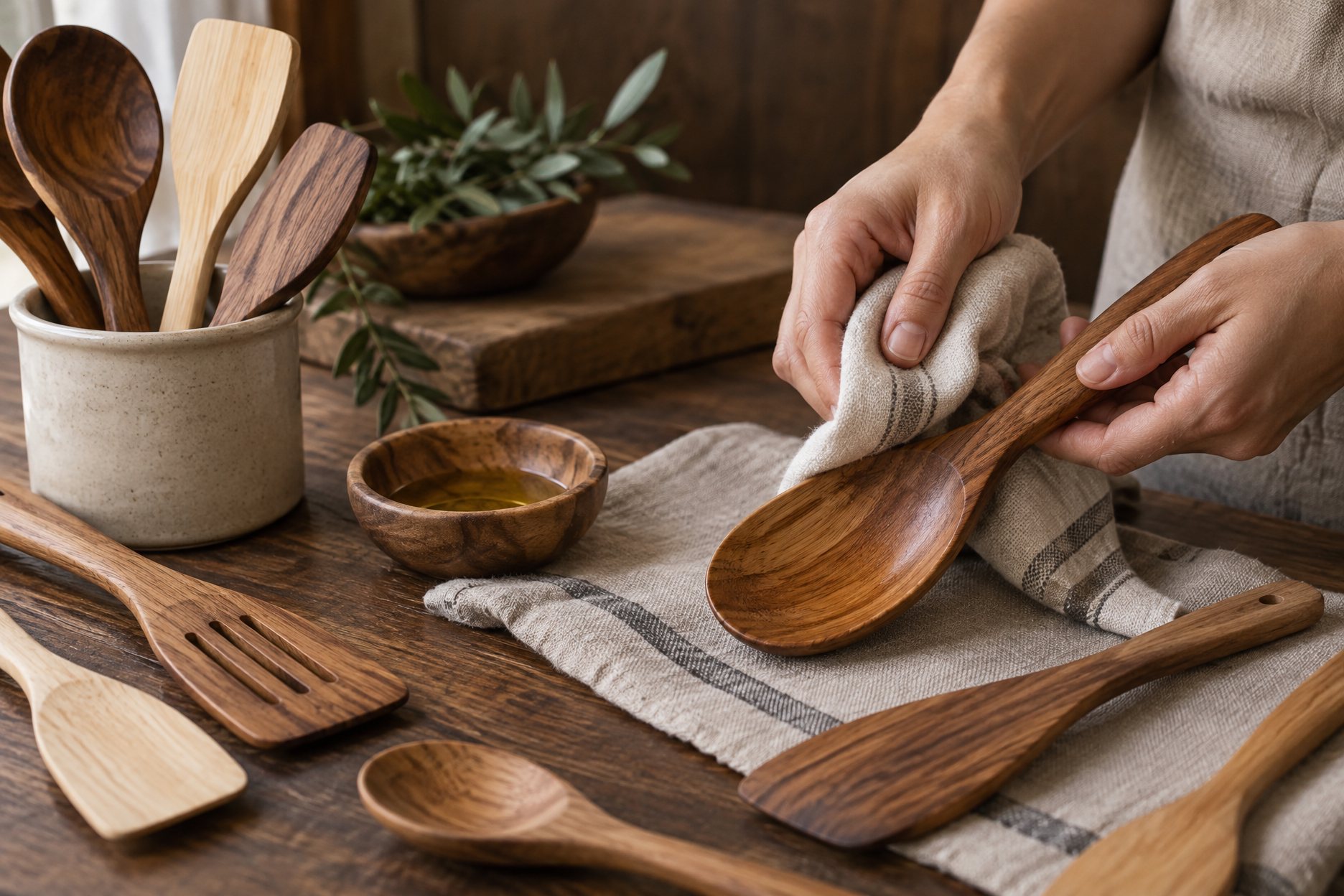
Care is part of the product
A wooden utensil set that fails in a customer's kitchen becomes a review complaint, a return, or both, and the causes are almost always care-related: a dishwasher cycle that dried and cracked a handle, a soak that raised the grain, a spoon left standing in a hot pot. The fix is not a better wood. It is better care guidance, shipped with the product and written for the finish the workshop actually applied. Treat care as a product feature rather than an afterthought, and the difference shows in fewer care-related complaints.
Everyday washing: hand wash and dry promptly
Hand wash wooden utensils in mild detergent and warm water, then dry promptly. Two common habits do most of the damage. Soaking: prolonged water exposure swells the grain and eventually cracks it. Dishwashers: sustained heat plus harsh detergent strips oil from the wood, leaving it dry, pale and crack-prone, and a single cycle can start the damage. Neither is fixable after the fact; prevention is the whole game, which is why these two lines belong on every care insert.
Also worth telling customers: do not leave wooden tools standing in a hot pot. The wood handles contact with hot food fine, but sustained heat at the waterline is how working ends turn rough and gray.
Re-oiling: the maintenance that keeps wood alive
When the surface looks pale or feels rough, the wood is asking for oil. The common choice is food-grade mineral oil, sometimes blended with beeswax: it penetrates the surface, it does not turn rancid, and users can renew it at home without special equipment. Heavy cooking oils are a poor substitute. Most vegetable oils oxidize and turn rancid on the surface, which is where the sour smell of a neglected wooden spoon comes from.
Application is simple enough to print: wipe a thin coat on with a cloth, let it absorb, wipe off the excess. There is no fixed schedule; the surface is the indicator. Heavy daily use means more frequent oiling, occasional use means less. Brands that explain this one habit convert a maintenance chore into a ritual customers mention approvingly in reviews. Our oiling note covers method and frequency in depth, and finish options are compared in the food-safe finishes note.
Refreshing: sanding rough spots
Rough or raised spots, a handle edge or the working end that lived in hot pots, refresh in minutes with fine sandpaper followed by re-oiling. Sand lightly with the grain, wipe away the dust, oil. The piece comes back to smooth. This is the repair to teach in care copy: it turns "my spatula got rough" from a return reason into a five-minute fix, and it answers the question every wooden-spoon owner eventually asks, which is whether the damage is permanent. It usually is not. The full sequence is in the sanding note.
Sanitizing without damage
For sanitizing after raw poultry or a periodic deep clean, a mild vinegar solution or a hydrogen peroxide wipe does the job. Bleach soaks are the wrong tool for wood: they are harsh on the surface and the finish, for no gain over the gentler methods. What matters for brand copy is giving customers a sanctioned method, so they do not improvise with something destructive.
Storage: dry, upright or flat
Store wooden utensils dry, upright in a holder or crock, or laid flat in a drawer. A holder by the stove keeps tools ventilated, at hand and off the countertop, which is why holders sell as the finishing piece of gift sets; the holders and crocks page covers the options for your line. What storage should avoid is a closed, damp drawer or a jar beside a steaming kettle: trapped moisture is how mildew and odor stories start.
When to replace
Wooden tools last for years with this care, but they are not immortal. Deep cracks that sanding cannot close, or a persistent odor that cleaning does not remove, are the signs that a piece has done its work and should be replaced. Saying this plainly in care copy builds trust: it reads as honesty, because the advice is replace after years of use, not replace often. The full list of signals is in the replacement note.
Why wood still earns its place
Care burden is the usual objection to wood, so state the other side honestly in your listing copy. Wooden tools are gentle on nonstick coatings in a way metal tools are not. Wood conducts heat slowly, so handles stay comfortable over a hot pot. And a well-maintained wooden spoon is a repairable object in a way few kitchen materials are: sand it back, oil it, keep going. The material trade-offs against silicone are covered on the wood versus silicone page.
Care quick reference
| Situation | What to do |
|---|---|
| After each use | Hand wash with mild detergent and warm water; dry promptly |
| Never | Dishwasher, long soaks, bleach soaks, standing in hot pots |
| Surface pale or rough | Re-oil with food-grade mineral oil; wipe off the excess |
| Rough spots | Fine sandpaper with the grain, then re-oil |
| After raw meat contact | Mild vinegar solution or hydrogen peroxide wipe; dry after |
| Storage | Dry, upright in a holder or laid flat |
| Deep cracks or persistent odor | Replace the piece |
Turning care guidance into inserts and fewer returns
Care guidance becomes a brand asset when it ships with the product, written for the species and finish actually supplied. Three formats work well. A care card in the box, matching the finish system confirmed for your program, so the card matches the set it ships with. A short care page on your own site that absorbs the searches customers make when something goes wrong, so they find your answer, not a forum. And for premium sets, a packaging line that names the finish: knowing the set ships oiled with food-contact mineral oil is itself a quality signal.
The material on this page and in our blog library can be adapted for your packaging inserts, matched to the finish system confirmed for your program, so what the card says and what the workshop did agree. That agreement is the whole trick: generic care instructions create the very complaints they were meant to prevent.
What to send the desk
If you are specifying a new set, send your species, finish intention and channel, and care copy is written to match and supplied with your program documents. If you already sell wooden utensils and want the care material adapted for inserts, tell us the finish system your current supplier uses. Send a brief, or check reference ranges on the MOQ and lead time page first.