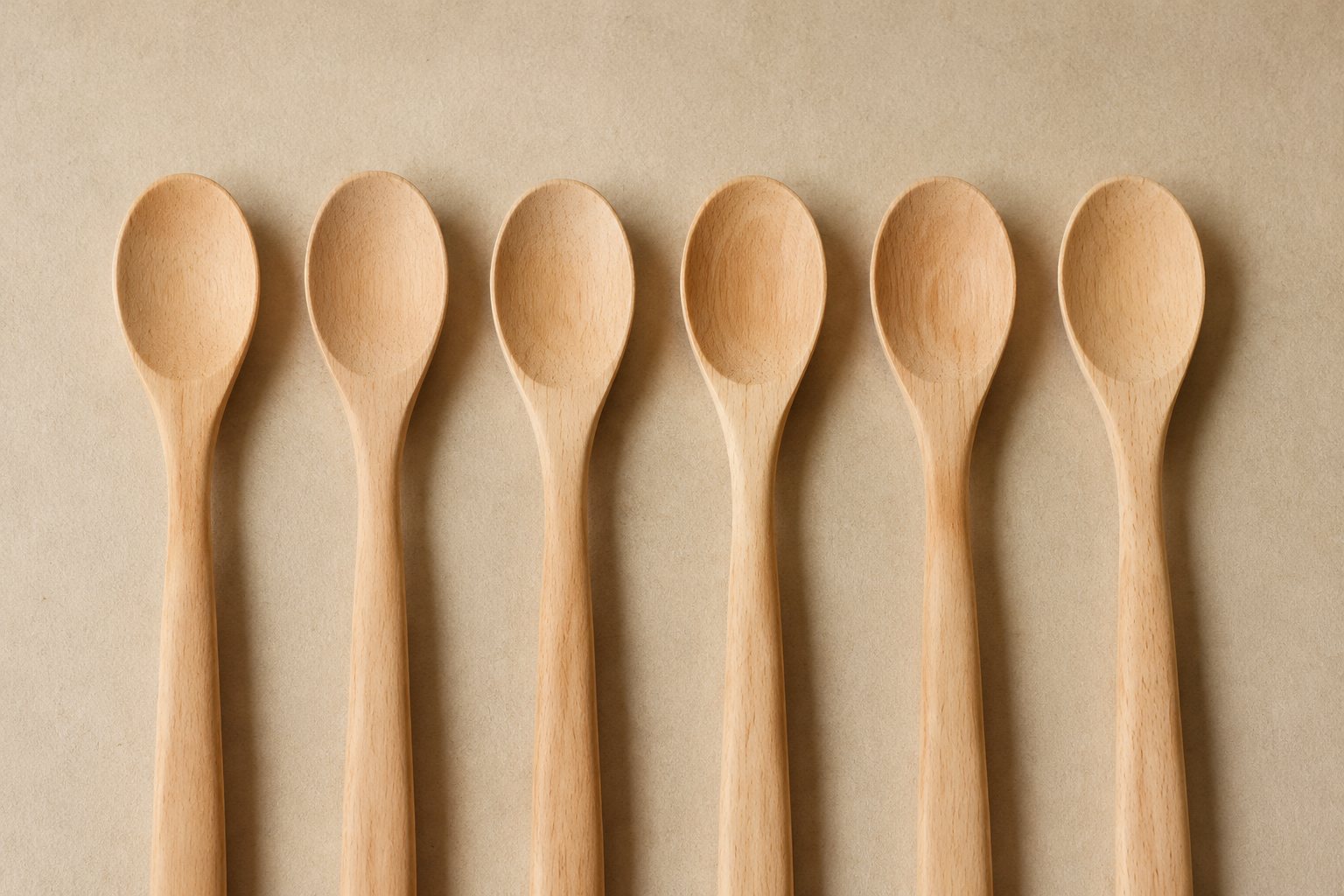
The wood behind the classic wooden spoon
Ask a workshop what most wooden spoons are carved from and the answer, more often than not, is beech. The species has earned that role on three traits: it is hard, its grain is fine and even, and its pale color stays consistent from one blank to the next. For a buyer, those traits translate into something more valuable than beauty, which is predictability, and predictability is what value and mid-market programs are built on.
Beech is also the species buyers under-specify. Because it is familiar, programs treat it as a commodity and skip the sample discipline that premium species get, then discover that finish behavior, tone across suppliers and sanding quality still vary. This guide covers what beech is like, why its consistency is an operational advantage, where it fits a range, and the reference MOQ and lead time ranges for a beech program.
What beech is like as a material
Beech is a hard, fine-textured hardwood with an even grain and a pale cream-to-light-pinkish tone. It carves and machines cleanly, holds a crisp edge on a spatula blade, and sands to a smooth, quiet surface without the prominent striping of acacia or the darker character of teak. It takes light finishes well: a food-contact mineral oil warms the surface slightly and preserves the clean pale look most beech programs want.
Consistency is the trait that matters most in production. Where a bold-grained species needs tone sorting and careful expectation-setting, beech pieces from one run look alike. That simplifies quality checks, keeps product photography predictable across restocks, and makes the golden sample easy to judge against. When hundreds of units must look like the listing image, that uniformity is worth real money in avoided disputes, sorting labor and rework.
The workhorse role in a product range
Beech is the standard choice for spoons and spatulas: solid spoons, slotted spoons, turners, corner spoons, kids' sizes and value sets are all natural beech territory. It also pairs well inside mixed sets, beech tools with a teak or acacia holder, for instance, where the pale tools carry the daily working load and the accent piece carries the shelf appeal. Browse the spoon and spatula shape pages for the silhouettes workshops hold as stock.
On price position, beech sits value to mid. Blanks are economical and widely available, so a brand can protect margin on an everyday line without shipping anything that feels cheap in the hand. The honest limitation is story rather than performance: beech is familiar, not exotic, so it rarely carries a flagship on the wood's name alone. Many brands solve this by pairing a beech basics line with a teak or acacia premium line and letting price do the sorting; the species comparison covers that pairing in detail.
Supply and workability
Beech is a common European hardwood, with North American supply also part of the commercial picture. State supply generally on product pages; claims about a specific mill's logs are not verifiable and do not belong on a spec sheet. Because the species trades widely in commercial sizes, blank supply rarely delays a program, which is a real scheduling advantage over premium species where specific widths for larger tools may need sourcing before production can start.
Workability is the other half of the value case. Beech carves cleanly at speed, sands to a fine finish without fighting the grain, and accepts engraving with crisp edges, which matters if you are planning a logo program. For the same reasons, beech is often the species workshops use to cut first articles of a new shape before cutting into premium blanks, a sequencing detail worth knowing when you review samples for a mixed-species range.
Finishing beech
Light finishes suit beech. Food-contact mineral oil, sometimes blended with beeswax, is the common choice, applied at the workshop and renewable by the user at home. Beech also accepts light staining where a program wants a warmer tone, though think before you specify it: buyers of pale wood usually want the natural look, and a stain adds a finish layer that needs its own sample approval and documentation. Film finishes such as lacquer are generally avoided on cooking surfaces because they can chip. Whatever system you choose, have it confirmed in writing and match your care copy to it, so customers maintain the set the way the workshop finished it. The options are set out in our food-safe finishes note.
Reference ranges for a beech program
| Item | Typical reference range | Notes for beech |
|---|---|---|
| MOQ, stock shapes | From about 500 pcs per style | The classic stock-spoon territory |
| MOQ, custom shapes | Typically 1,000+ pcs per style | New patterns amortize carving setup |
| Stock sample | About 3-5 working days | Fastest route to a feel of the species |
| Custom sample | About 7-15 working days | Logo, finish and packaging on your shapes |
| Bulk production | Typically 30-45 days after approval | Blanks usually in stock, so fewer surprises |
These are typical reference ranges for the category, not a quotation. The MOQ, sampling schedule and bulk lead time for your beech program are confirmed in writing before any deposit is paid, and the mechanics behind the numbers are explained on the MOQ and lead time page. Consistency expectations are checked against the golden sample under the routine described on the quality control page.
What to send the desk
A reference photo of the shapes and tone you want, your price position, and a quantity range per style. The desk replies with stock options, a reference MOQ and a sampling plan in one written response, and can price a beech basics line alongside a premium species line so you see the whole range. Send a beech brief, or compare species on the wood library page first.