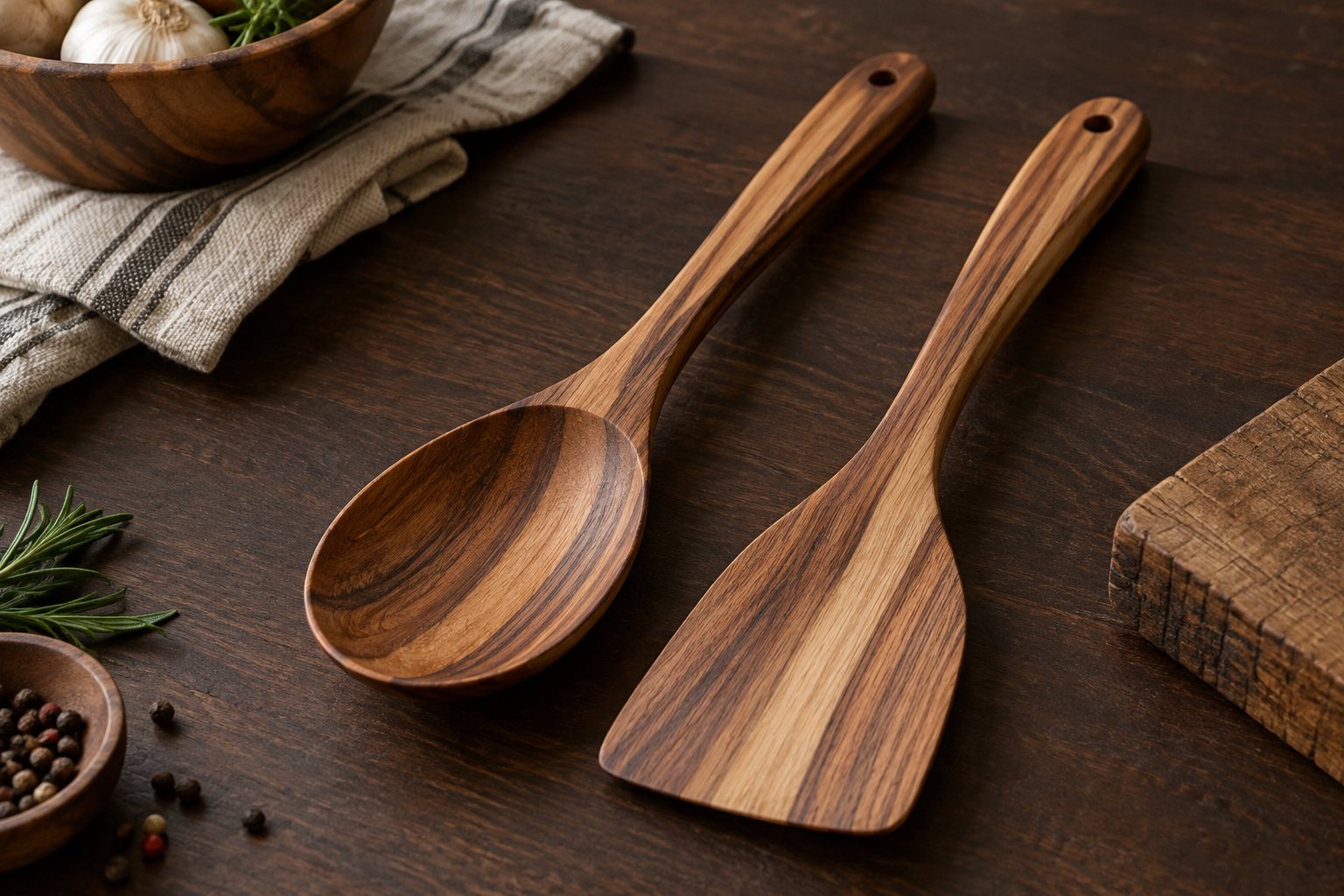
Why acacia divides the room
Show two buyers the same acacia spoon and you will get two different reactions. One sees rich contrast: pale sapwood against deep brown heartwood, long striped grain running the length of the handle, a piece that looks expensive on a shelf. The other sees a quality-control problem: no two pieces in the carton match. Both reactions are correct, and how your program handles that fact decides whether acacia becomes an asset or a liability.
The species is genuinely good kitchen material underneath the look. Acacia is dense and water-resistant, with the substantial feel buyers associate with premium wood, so the question is never whether the wood performs. The question is whether your photography, packaging and sample approvals are set up for a species whose signature is difference.
The material itself
Acacia is a dense hardwood with a distinct striped grain, and the density gives it the practical traits buyers want: edges that hold up in daily use, good behavior around kitchen moisture, and a smooth surface after sanding. The tone range runs golden to deep brown, and the long stripe pattern is the species signature, bold and visible rather than quiet.
Workability is solid but demands respect. Bold grain means each blank is slightly different to carve and to sand, and surface reading differs from pale, even woods: the same mineral-oil finish reads warmer and deeper on acacia, so finishes are approved on acacia samples, never transferred from a beech program. None of this is a defect; it is the cost of the look, and it is why acacia programs benefit from workshops that carve the species daily.
Variation is the specification
Color, grain and shade vary piece to piece in all solid wood; acacia varies more than most, and that is exactly why the golden sample exists. The golden sample is the physical piece you approve before production, and it defines the acceptable range of tone and striping for the whole run. With it, the workshop carves hundreds of pieces and your inspector accepts the cartons without an argument at packing. Without it, every unit becomes a debate. Our sample process note explains how golden samples are set, and the general inspection logic is on the quality control page.
Photography deserves the same discipline. Product-page images shot from a prototype can look noticeably different from production acacia, whose grain runs bolder or quieter depending on the blanks in that batch. Buyers who photograph actual production pieces and describe the variation honestly, no two pieces alike, turn it into the sales story gift channels respond to. Buyers who promise visual uniformity in acacia are writing their own review-section complaints; for shelf-set uniformity, beech or teak is the honest recommendation.
Where acacia fits your range
Acacia is strongest where character sells: wedding and housewarming gift sets, salad server pairs where the grain is on show, corporate gift programs that want each unit to feel individual, and boutique retail where warm tones match the store palette. The variation reads as handmade value even on machine-consistent shapes, which is a marketing advantage you pay for in expectation-setting rather than in price.
On position, acacia sits mid to premium: below teak on blank cost in most programs, above beech, which leaves room for gift-grade packaging without premium-species pricing. Many brands carry both ends, with beech as the everyday line and acacia as the gift line, and the species complement each other cleanly because the price gap does the sorting. Set composition follows the channel: gift sets add a holder or salad servers; retail multipacks stay to spoons and spatulas. The acacia program note covers composition choices in depth, and our grain and tone variation note covers how to write the expectation.
Program notes for acacia
- Finish. Food-contact mineral oil is the common system, sometimes blended with beeswax; film finishes are generally avoided on cooking surfaces because they can chip. Approve the finish on acacia samples, since dense woods read oil differently from pale ones.
- Engraving. Bold striping changes how a laser mark reads against the surface, so approve the engraving proof on an acacia piece, not on a pale-wood dummy.
- Tone sorting. For gift programs, ask whether pieces can be sorted by tone range within the run, and what that does to yield and schedule, because sorting trades usable pieces for uniformity. Any sorting agreement belongs on the spec sheet.
- Care copy. Write instructions for the species and finish you ship, so customers hand wash and re-oil on the schedule acacia actually needs.
- Allowance. Bold-grain blanks carry a higher visual reject share than even-grained species; programs price that allowance in rather than discovering it at inspection.
Reference ranges for a first acacia program
| Item | Typical reference range | Notes for acacia |
|---|---|---|
| MOQ, stock shapes | From about 500 pcs per style | Stock spoons, servers and spatulas |
| MOQ, custom shapes | Typically 1,000+ pcs per style | New patterns amortize carving setup |
| Stock sample | About 3-5 working days | Assess the tone range, not just one piece |
| Custom sample | About 7-15 working days | Logo, finish and packaging on your shapes |
| Bulk production | Typically 30-45 days after approval | Golden sample approved before the run starts |
As always these are typical reference ranges for the category, not a quotation for your program; the MOQ and calendar for your acacia set are confirmed in writing before sampling starts. What moves the numbers, and why custom shapes carry a higher minimum, is explained on the MOQ and lead time page.
What to send the desk
A reference photo of the grain character you like, your channel, gift, retail or corporate, and a quantity range per style. The desk replies with stock versus custom options, a reference MOQ and a sampling plan in writing, including how the golden sample will be set for the run. Start an acacia brief, or compare species first on the wood library page.