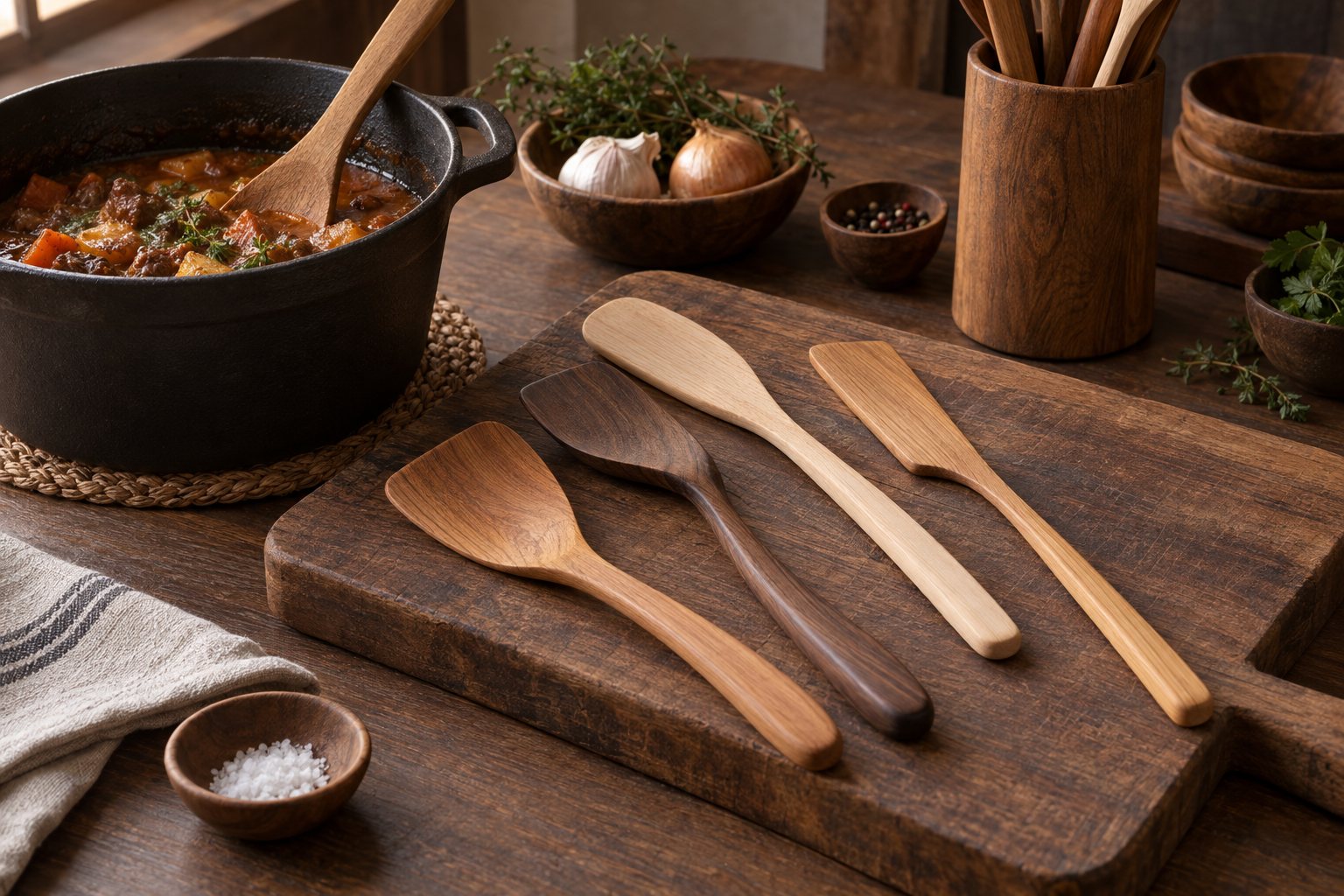
A shape with a story buyers can tell
Most utensil shapes have to be explained with function alone. The spurtle is different: it is a wooden stirring stick of Scottish origin, traditionally associated with porridge making, where it was used to stir thick oats without the gluten-deflating action of a spoon. That history is a merchandising asset, because it gives packaging copy, a product video and a retail shelf-talker something genuine to say. But a story only carries a product through the first purchase. The spurtle stays in drawers, and earns reorders, because it genuinely performs in thick dishes, which is where this page starts the assessment.
What a spurtle does in the pot
A spurtle is a slim, handle-ended stick with no bowl and no sharp edges. In practice that geometry does three jobs well. It stirs thick, sticky dishes, porridge, polenta, stews and rice, where a spoon bowl drags and a whisk clogs. It scrapes the pot bottom cleanly as it goes, because the rounded end meets the pan surface evenly. And it folds rather than whips, which keeps dense mixtures textured. Cooks who adopt one tend to keep it on the counter, which is exactly the behavior a brand wants from a utensil, and it is the honest core of the pitch behind the romance.
Straight versus angled
| Variant | Profile | Strengths | Position in a range |
|---|---|---|---|
| Straight spurtle | Slim turned stick, rounded working end, slight handle swell | Traditional look; stirs tall pots without wrist strain; cleans easily | The classic single-SKU story piece |
| Angled spurtle | Working section set at an angle to the handle | Keeps the hand above the pan rim; reaches pan corners flat; scrapes edges | The practical upgrade and set piece |
The two variants are complements, not rivals. Straight spurtles carry the heritage story and photograph beautifully beside oatmeal and cast iron; angled spurtles convert buyers who try one in a sauce pan and feel the difference at the corners. Programs that carry both usually lead with the straight shape and let the angled version lift the second purchase, and the pair bundles naturally into a set around a solid spoon.
Why spurtles suit nonstick cookware
The same geometry that makes a spurtle good in porridge makes it kind to coated pans. There is no metal edge to gouge a nonstick coating, and the rounded wooden end distributes contact instead of concentrating it the way a spatula corner can. Wood is gentle on nonstick coatings versus metal tools in general, and the spurtle is the purest expression of that property in the category. Wood also conducts heat slowly, so the handle stays comfortable over a long stir where a metal rod would grow hot enough to need a glove. The care conditions are the category standards: hand wash and dry promptly, never soak or dishwash, and re-oil when the surface looks pale, with the full routine in the care hub.
Species and spec notes
Teak suits the premium position: dense, oily, water-resistant, warm brown with dark striping, and it turns cleanly on a lathe, which is how spurtle handles get their swell. Beech covers the value end with pale, even grain that takes light finishes well. Acacia adds bold striped grain for gift positioning, with a golden sample agreed because the grain varies piece to piece. Lengths commonly run roughly 10-13 in for cooking tools as common options, confirmed on the spec sheet, and the working end diameter is sampled in hand because stiffness in a thick stew is the whole point of the tool.
Positioning a spurtle in a range
As a single story piece, a straight teak spurtle with a laser-engraved handle anchors a gift shelf talker. As a set member, an angled spurtle gives a five-piece kitchen set a point of difference that identical spoon-spatula sets lack. As a seasonal item, the porridge story supports autumn and winter promotions, which conveniently sits opposite the salad-servers season and keeps a range working all year. The deeper background is in our spurtle explainer, and the shape pairs with the pan-safety argument in the wood versus silicone comparison.
Turning, profiles and consistency
Spurtles are turned pieces, which changes what consistency means for them. Round tools show runout and taper immediately in the hand, so the workshop controls the diameter along the working length and the swell of the handle against the approved profile, and we check samples against that golden profile rather than against a memory of it. Because there is no bowl to carve, finishing time is short and stock MOQ references stay reachable even for small programs; the trade-off is that a spurtle's quality lives entirely in the feel, smooth transitions, no ridges where the lathe changed grip, and an end that sits flush against a pot bottom. Buyers who try one in a thick stew keep it for that flush contact; the story does the rest. For programs planning a family, straight and angled profiles can share one species and one finish so the pair reads as a unit on the shelf.
What to send the desk
- Straight, angled or both, and whether stock profiles are acceptable.
- Species and retail position.
- Length and working-end feel, described by the dishes you want it to handle.
- Branding: engraved handle, branded hang tag, or both.
- Quantity per style and the season you are stocking for.
The spurtle rewards brands that explain it well, so plan the copy with the sample. Send a brief and the desk will propose stock profiles and species in one written reply.