Why teak sits at the top of most buyer shortlists
When kitchenware brands brief the desk for a premium wooden utensil set, teak is the species they name first, and search behavior mirrors it: in our keyword data, teak draws more buyer search interest than any other wood in the range. The interest has practical roots. Teak is dense and naturally oily, so finished pieces feel substantial in the hand and resist water uptake better than most pale hardwoods. The tone photographs warmly, which matters when your product page has to sell the set before anyone touches it.
Buyer interest is not the same as buyer knowledge, though. Teak programs come apart in predictable ways: tone variation is written off as a defect instead of being defined against an approved sample, finishes are copied from beech programs without testing on teak, and schedules are promised before blank supply is confirmed. This guide covers the material, the supply reality, the finishing notes specific to teak, and the reference ranges for MOQ and lead time, so your program starts with the right questions.
What teak is like as a kitchen material
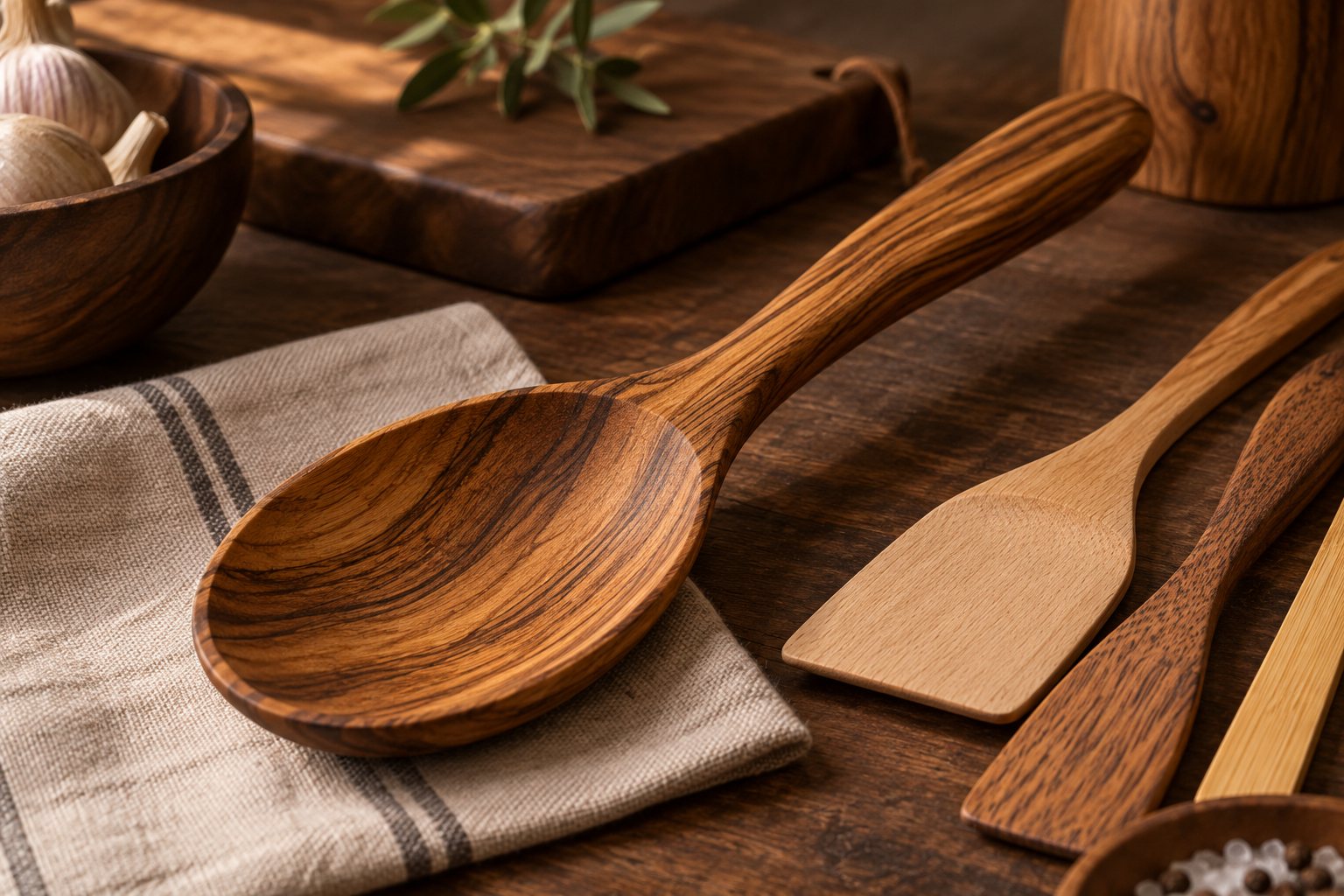
Three properties drive the reputation. First, density: teak is heavy for its size, and a teak spoon communicates quality the moment a customer lifts it. Second, natural oil content: the wood carries its own oils, which is why the surface feels smooth out of the box and why it resists water uptake, a real advantage for tools that live beside the sink. Third, appearance: the color is a warm brown, running from honey toward deeper chestnut, with darker striping along the grain that gives each piece visible character.
Those properties carry through to daily use. Dense grain sands to a clean, splinter-free edge and keeps it under regular washing. Natural oil content means the wood takes a renewing mineral-oil finish and holds it longer between applications than paler species. And like all wood, teak conducts heat slowly, so handles stay comfortable over a hot pot, and the working end is gentle on nonstick coatings compared with metal tools.
Where teak comes from
Commercial teak is commonly plantation-grown in Southeast Asia, and that is the supply the workshops we coordinate draw on. Describe origin generally and honestly in your product copy: plantation-grown teak from Southeast Asia is accurate; claims about a specific forest or a specific mill's log origin cannot be verified, so they do not belong on a spec sheet.
Production sits in China's kitchenware belt. Workshops in Zhejiang's kitchenware manufacturing region carve teak alongside beech and acacia, and the desk matches your program to a verified partner workshop based on carving, sanding and finishing capability. We are a sourcing desk, not a factory: the workshop assigned to your program does the carving, and we check the work against the samples you approved. How that checking works is described on the quality control page.
What a well-made teak set actually requires
Because "best teak wooden utensil set" is a search phrase rather than a standard, define the criteria you will judge a program on:
- A finish system in writing. Food-contact mineral oil, sometimes blended with beeswax, is the common approach; film finishes such as lacquer are generally avoided on cooking surfaces because they can chip. Confirm exactly what your set ships with.
- Sanding quality you can feel. Smooth to the touch, no rough edges or splinters, checked at the workshop and again at inspection.
- An approved golden sample. Teak striping varies piece to piece; the golden sample defines the acceptable range, so variation is settled before packing, not argued at it. The sample process note explains how that works.
- Engraving approved on proof. Logo depth, size and placement confirmed on the artwork proof before the run.
- A spec sheet that matches the page. Piece count, lengths and species per piece in writing, so the product page and the carton agree.
Finishing notes specific to teak
Teak's natural oiliness changes finishing behavior compared with paler woods. The same mineral-oil system reads warmer and deeper on teak, and it penetrates a dense, pre-oiled surface differently than it does beech. Two consequences for buyers. First, approve the finish on teak samples, not on a pale-wood sample from another program, so what you sign off is what ships. Second, write care instructions for the species and finish you actually use, so customers re-oil on the schedule your set needs. Finish options and what to confirm are covered in our food-safe finishes note.
If you plan to market the set as ready to use, have the workshop confirm the finishing steps behind that wording and mirror them in your packaging copy. A finish claim you cannot trace back to the spec sheet is the kind of detail that turns into a review-section complaint.
Where teak earns its position
Teak is the lead species for premium programs: five- and seven-piece kitchen sets with a holder, engraved corporate gift runs, hospitality table service and flagship lines where the material story justifies the shelf price. It can anchor a range on its own, with grain striping as the visual identity, or top a tiered line above beech basics and acacia gift pieces. What it is not is a value play: blanks cost more, and a teak set positioned against budget wooden spoons will feel overpriced before it gets a fair hearing. For value lines, beech is the honest recommendation; for bold gift-channel character, acacia. The species comparison walks through the trade-offs.
MOQ, sampling and lead time reference
| Item | Typical reference range | Notes for teak |
|---|---|---|
| MOQ, stock shapes | From about 500 pcs per style | Existing spoon, spatula and server patterns |
| MOQ, custom shapes | Typically 1,000+ pcs per style | New silhouettes amortize carving setup |
| Stock sample | About 3-5 working days | Feel the species and finish before committing |
| Custom sample | About 7-15 working days | Your logo, finish and packaging |
| Bulk production | Typically 30-45 days after approval | Plus blank sourcing time if teak is not in stock |
These are typical reference ranges across the category, not a quotation for your program. The MOQ, sampling schedule and bulk lead time for each teak program are confirmed in writing before any deposit is paid. The ranges are explained in detail on the MOQ and lead time page.
What to send the desk
A reference photo of the set you want to match, your retail price position, intended piece count and a rough quantity per style. With those facts the desk can recommend stock versus custom shapes, confirm the teak route, and reply with a reference MOQ and sampling plan in one written response. Send your teak brief, or start from the wood library to compare species first.